
Understanding Post-Consumer Recycled Content
If you’ve shopped for eco-friendly paper products, you’ve probably seen the term “post-consumer recycled content” on packaging or product descriptions — but what does it actually mean? This guide breaks down exactly what post-consumer recycled content is, how it compares to other types of recycled material, and why the distinction matters when choosing sustainable print products.
What Is Post-Consumer Recycled Content?
Post-consumer recycled content refers to material that has been used by a consumer, disposed of, collected through recycling programs, and then reprocessed into new products. In the case of paper, this typically means paper that was used — like office paper, newspapers, magazines, or cardboard boxes — recycled through curbside or commercial recycling programs, and then remanufactured into new paper products.
In simple terms: post-consumer recycled (PCR) content is material that completed its full life cycle as a consumer product before being recycled into something new.
What Is Post-Consumer Fiber?
“Post-consumer fiber” refers specifically to the wood or paper fiber portion of post-consumer recycled content used in papermaking. When you see a product labeled with a percentage of post-consumer fiber (sometimes abbreviated PCW, for “post-consumer waste”), it indicates how much of that paper’s fiber came from previously used, consumer-recycled paper products rather than virgin wood pulp.
Post-Consumer vs. Pre-Consumer vs. Post-Industrial Recycled Content
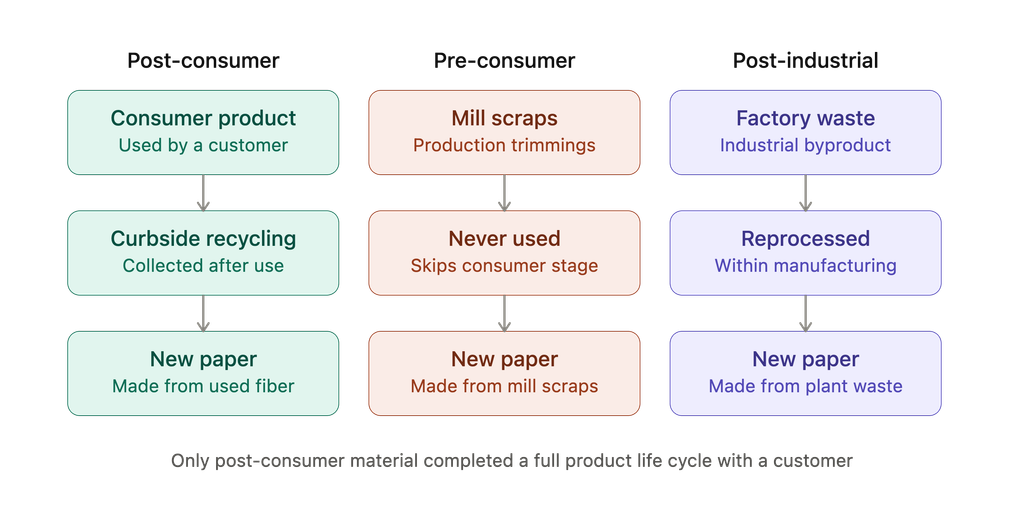
These terms are often confused, but they describe different points in a product’s life cycle:
| Type | Source | Example |
|---|---|---|
| Post-consumer | Material used by a consumer, then recycled | Recycled office paper, used cardboard boxes |
| Pre-consumer | Manufacturing scraps and trimmings that never reached a consumer | Paper mill trimmings, printing overruns |
| Post-industrial | Often used interchangeably with pre-consumer; industrial byproducts recycled back into production | Factory scrap material |
The key distinction: post-consumer recycled content required an actual consumer to use and dispose of the product first, while pre-consumer (and post-industrial) material never left the manufacturing process to begin with. Post-consumer recycled content is generally considered the more meaningful form of recycling from an environmental standpoint, since it diverts material that would have otherwise ended up in a landfill after consumer use.
Why Does Post-Consumer Recycled Content Matter?
Choosing products with a high percentage of post-consumer recycled content has real environmental benefits:
- Reduces landfill waste: Diverts used paper and packaging from landfills back into productive use.
- Conserves natural resources: Reduces the demand for virgin wood pulp, helping preserve forests.
- Lowers energy and water use: Producing paper from recycled fiber typically uses less energy and water than producing it from virgin materials.
- Closes the recycling loop: Buying post-consumer recycled products creates ongoing demand for recycling programs to function — without demand for recycled material, curbside recycling has less economic incentive to continue.
Can Paper Be Recycled Indefinitely?
Not quite. Paper fibers shorten and weaken slightly each time they go through the recycling process. According to the EPA, paper fibers can typically be recycled about 5 to 7 times before they become too short and weak to be used in new paper production. This is why virgin fiber is still blended into most recycled paper products — to maintain strength and quality — and why continually feeding new (responsibly sourced) fiber into the system alongside recycled content is part of a sustainable paper cycle.
How Much Post-Consumer Recycled Content Should You Look For?
Recycled content percentages vary widely by product and manufacturer. Some products are made with 100% post-consumer recycled content, while others blend a percentage of PCR material with virgin fiber to balance sustainability with paper strength, brightness, and cost. When evaluating a paper product’s sustainability, look for:
- The specific percentage of post-consumer recycled content stated on the product (not just a general “eco-friendly” claim)
- Third-party certifications like FSC (Forest Stewardship Council), which verify responsible sourcing for any virgin fiber used alongside recycled content
- Clear labeling distinguishing post-consumer content from pre-consumer or post-industrial content, since the two are not equivalent in environmental impact
Post-Consumer Recycled Content in Printing
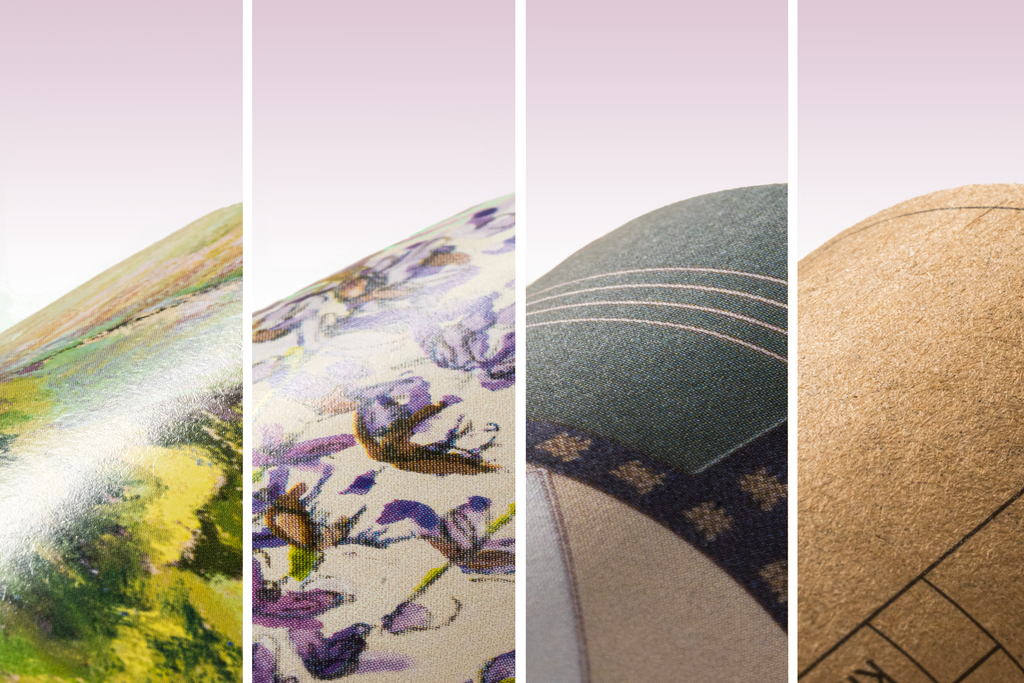
For printed materials specifically, post-consumer recycled paper performs very similarly to virgin paper in most modern printing processes, and quality has improved significantly over the years. Many printers now offer a range of post-consumer recycled paper options — from 30% blends to 100% post-consumer content — allowing businesses to choose the right balance of sustainability, cost, and print quality for their project.
Ready to Print on Recycled Paper?
At Greenerprinter, we offer a range of post-consumer recycled paper options for every type of print project, so you can make a sustainable choice without compromising on quality.
Ready to bring your project to life? Greenerprinter offers a full range of sustainable printing options. Explore some of our most popular products:
Calendar Printing
Custom Calendars | Wall Calendars | Saddle-Stitched Calendars
Book & Booklet Printing
Custom Books | Custom Booklets | Saddle-Stitched Booklets | Zines | Catalogs
Brochure Printing
Custom Brochures | Tri-Fold | Bi-Fold | Gate Fold | Z-Fold