
Paper Weight Guide: How to Choose the Right Weight for Your Project
If you’ve ever stared at “24 lb” and “80 lb” on two boxes of paper and wondered why one is thinner than a business card and the other is basically cardstock, you’ve found the single most confusing thing about paper weight: the number alone doesn’t tell you much without knowing what category of paper it’s describing. Here’s the paper weight guide that actually clears it up.
What Does “Paper Weight” Actually Mean?
Paper weight (sometimes called basis weight) is technically the weight of 500 sheets — a “ream” — cut to a standard size before it’s trimmed down to the size you actually buy. The catch is that the standard size used for that measurement is different for different categories of paper. Bond and text paper are measured on one standard sheet size, while cover stock and cardstock are measured on a different, larger standard sheet size. That’s the entire reason “80 lb text” and “80 lb cover” are two completely different papers — the cover version is noticeably thicker and stiffer, even though the number is identical. Most of the rest of the world sidesteps this confusion with GSM (grams per square meter), which measures weight per unit area directly regardless of paper category — which is why you’ll often see both numbers listed side by side.
Paper Weight Chart: Bond/Text vs. Cover/Cardstock
| Weight | GSM (approx.) | Typical Use |
|---|---|---|
| 20 lb bond (text) | ~75 gsm | Standard copy/printer paper |
| 24 lb bond (text) | ~90 gsm | Everyday inkjet/laser printing, letterhead, flyers |
| 28 lb text | ~105 gsm | Brochures, tri-folds, menus |
| 32 lb text | ~120 gsm | Premium invitations, wedding programs, fine stationery |
| 65 lb cover | ~176 gsm | Lightweight cardstock — postcards, layered invitations |
| 80 lb cover | ~216 gsm | Most popular cardstock — business cards, DIY invitations |
| 100 lb cover | ~270 gsm | Flyers, signage, invitation backings |
| 110 lb cover | ~298 gsm | Premium cardstock projects |
| 130 lb cover | ~352 gsm | Heavyweight stock (verify your printer supports it) |
Greenerprinter’s Text and Cover Weight Options
The chart above is the general industry picture — but if you’re printing with Greenerprinter specifically, here’s the actual lineup, with the point (caliper) thickness for each:
| Weight | Caliper | Typical Use |
|---|---|---|
| 70# Text | 4.6 pt | Book interiors, flyers |
| 80# Text | 5.2 pt | Booklet pages, letterhead |
| 100# Text | 6.6 pt | Heavy interiors, posters |
| 100# Cover | 11 pt | Soft covers, postcards |
| 120# Cover | 13.1 pt | Premium covers, EDDM postcards |
| 130# Cover | 14.5 pt | Extra-heavy covers |
| 18 pt Kraft Board | 18 pt | Board-weight cards and tags |
Two coating options run across most of that range: uncoated stock (100% post-consumer waste recycled, FSC certified, with a natural, tactile feel) and silk-coated stock (10–30% post-consumer waste recycled, FSC certified, with a smooth, semi-gloss clay coating) — plus an unbleached kraft board with visible fiber character for a more raw, natural look. One useful reference point on brightness: their Gemstone Silk in 120# cover runs at 95% brightness, which lines up with the “bright enough for external, client-facing pieces” range described above.
24 lb vs. 32 lb Paper — and Other Common Comparisons
24 lb bond is the standard weight most people mean by “normal printer paper” once you go a step up from basic 20 lb copy paper — noticeably more opaque and substantial, and a common choice for anything meant to look a little more polished than a quick internal printout. 32 lb bond is a clear step up again — sturdier, with a more premium feel, which is why it shows up in fine invitations and formal documents rather than everyday printing. The same logic applies further up the scale (32 lb vs. 40 lb, and so on): each step is a genuinely noticeable difference in thickness and rigidity, not a marginal one.
What’s “Normal” Printer Paper Weight — and What’s the Max for Inkjet or Laser?
Standard copier and printer paper — the kind used in most home and office printers by default — is 20 lb bond (about 75 gsm). That’s true whether you’re using an inkjet or laser printer; it’s the safe, universal default. Most inkjet and laser printers can handle heavier stock through their standard tray up to somewhere around 24–32 lb bond, and heavier cardstock (up to roughly 100–110 lb cover) through a manual or bypass feed tray on many models — but “most” isn’t “all.” The maximum caliper (thickness) a specific printer can feed varies by model, so it’s worth checking your printer’s manual before running a heavy cardstock project through it, rather than assuming it’ll handle anything you can buy.
Point Thickness: A Different Way to Measure Weight
Especially for cardstock, you’ll also see thickness expressed in “points” (pt) — thousandths of an inch — rather than lb or gsm. It’s the same idea as lb or gsm, just a different unit: for example, Greenerprinter’s 120# cover measures 13.1pt, and their 18pt kraft board is thick enough to work as board-weight cards and tags rather than a bendable cardstock. Point thickness and cover weight both describe the same underlying thing — how thick and rigid the stock is — just measured differently, which is why you’ll often see both numbers listed for the same paper.
Paper Brightness (92 vs. 96 vs. 100): Not the Same as Weight
Brightness is a completely separate measurement from weight — it describes how much light the paper reflects, on a 0–100 scale, and has nothing to do with thickness. 92-bright paper looks slightly softer and works well for everyday internal documents, with a lower cost per page and comfortable contrast for extended reading. 96-bright paper delivers visibly crisper blacks and cleaner whites, and is generally treated as the standard for client-facing or external materials. 98–100+ brightness paper pushes contrast and color reproduction further still, which is where photo-heavy marketing pieces and brand-critical print benefit most. A practical rule of thumb: 92-bright for internal use, 96-bright for anything going out the door.
Is Paper Weight the Same as Paper Density?
Not quite — this trips people up because the words feel similar. Paper weight (lb or gsm) measures mass per area, not true physical density (mass per volume). Two papers with the same gsm can still feel different in the hand if one is more compressed or coated than the other. True paper density — actual mass per cubic centimeter — generally falls in a fairly narrow range across most printing and writing papers, regardless of which “weight” category they’re in, since it’s driven more by how the fibers are pressed and finished than by the basis weight number.
Does Sheet Size Change the Weight Category?
No — paper weight and sheet size are independent of each other. An A5 sheet cut from 24 lb bond is still 24 lb bond; it’s simply a smaller piece cut from the same stock as a letter-size or A4 sheet at that weight. Weight describes the paper itself, not the dimensions it’s been trimmed to.
Some Real-World Paper Weight Comparisons
A case of standard 20 lb copy paper (ten reams of 500 sheets each) weighs somewhere in the neighborhood of 40–50 lbs, depending on the exact stock — worth knowing before you order more than you meant to carry. On the sustainability side, a commonly cited (and admittedly rough) estimate is that a single tree yields somewhere around 10,000 to 20,000 sheets of paper, with a wide range depending on the tree species, size, and pulping process — which is part of why recycled and responsibly sourced stock matters more than the per-tree math itself. And if you’re comparing printed products rather than blank paper: newspapers are printed on much lighter, thinner newsprint than standard office paper (chosen for cost and ink absorption, not durability), while magazines typically pair a lighter text-weight interior with a noticeably heavier cover stock — the same logic covered in our magazine printing guide.
How to Choose the Right Weight for Your Project
- Everyday printing and copying: 20–24 lb bond, if you’re printing on a home or office printer.
- Book interiors and flyers: 70# text.
- Booklet pages and letterhead: 80# text.
- Heavy interiors and posters: 100# text.
- Soft covers and postcards: 100# cover.
- Premium covers and EDDM postcards: 120# cover.
- Extra-heavy covers: 130# cover.
- Board-weight cards and tags: 18pt kraft board.
If you’re choosing between a “standard” and “premium” paper option at any print shop, the difference almost always comes down to some combination of two things — a step up in weight, and a step up in coating or brightness.
A Note on Paper Choices
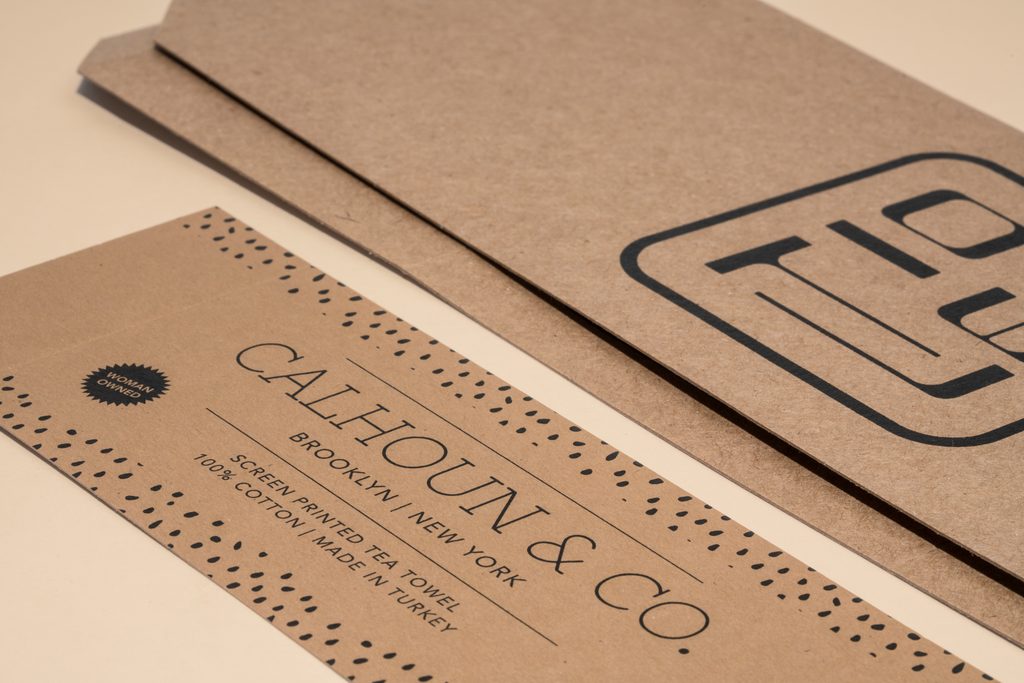
Greenerprinter’s own lineup runs from 70# text up through 130# cover and 18pt kraft board, in uncoated (100% post-consumer waste recycled), silk-coated (10–30% post-consumer waste recycled), or unbleached kraft board finishes — all FSC certified, with silk cover stock also Green-e energy certified and every stock carrying an Ancient Forest Friendly designation. Printing is done with soy-based inks throughout, so moving up to a heavier or premium weight doesn’t mean stepping away from sustainable stock.
Ready to bring your project to life? Greenerprinter offers a full range of sustainable printing options. Explore some of our most popular products:
Calendar Printing
Custom Calendars | Wall Calendars | Saddle-Stitched Calendars
Book & Booklet Printing
Custom Books | Custom Booklets | Saddle-Stitched Booklets | Zines | Catalogs