
What Is a Sell Sheet and How Can It Help Grow Your Business?
A sell sheet is a single printed page — usually 8.5″ x 11″, front or double-sided — that summarizes one product or service for a prospect, buyer, or press contact. It goes by several names depending on the industry: sales sheet, one-sheet, one-pager, or the older print-industry term “slick” (as in “sales slick”). All of them describe the same small, printed piece of information: a compact, standalone summary meant to get a specific point across fast, rather than a full pitch document.
Sell Sheet vs. Brochure: What’s the Difference?
This is one of the most common points of confusion, and it comes down to purpose as much as length:
| Sell Sheet | Brochure | |
|---|---|---|
| Length | One page (front, or front and back) | Multiple pages |
| Content focus | One or two products max | Multiple products or services |
| Purpose | Grab attention fast, spark curiosity — like an elevator pitch on paper | Build trust, answer questions, support a sales conversation already underway |
| Best used | First contact — trade shows, conferences, cold outreach | With prospects already interested and ready to learn more |
| Cost to produce | Low, easy to update or reprint | Higher, more design and print investment |
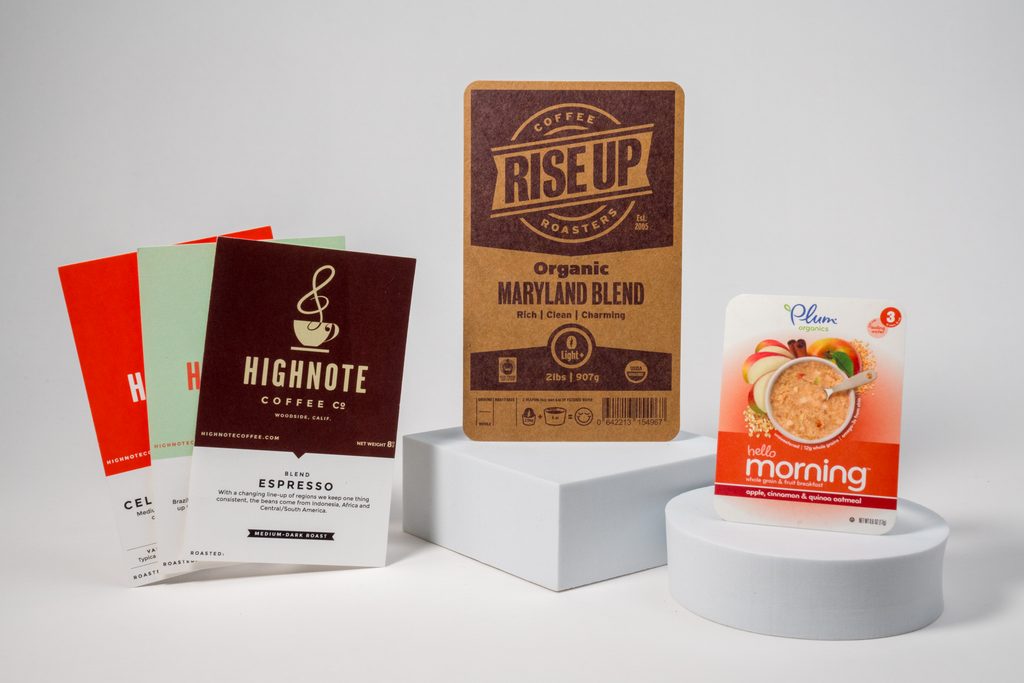
The short version: a sell sheet starts a conversation, and a brochure moves it forward. Neither one replaces the other — they usually work at different stages of the same sales process.
How Long Should a Sell Sheet Be?
One page. That’s not a loose guideline — it’s the entire point of the format. A buyer, retailer, or reporter deciding whether to pay attention to your product is often making that call in seconds, not minutes, so a sell sheet is built to be scanned rather than read start to finish. If a document needs two pages to make its case, it’s no longer really a sell sheet — it’s edging into brochure territory, which serves a different purpose at a different point in the conversation.
What Does a Sell Sheet Look Like?
A well-built sell sheet generally includes:
- A bold, benefit-focused headline — not just a product name, but the reason someone should keep reading.
- A clear, concise product or service description.
- Key features and benefits, usually as short bullet points rather than paragraphs.
- High-quality visuals — a product photo, a chart, or both.
- Consistent branding — logo, colors, and fonts that match everything else you produce.
- Contact information and a clear call to action, so a genuinely interested reader knows exactly what to do next.
Should Pricing Appear on a Sell Sheet?
It depends on who’s reading it. For B2B sell sheets aimed at distributors, retail buyers, or wholesale accounts, pricing (and often margin or minimum order details) is usually expected, since the reader is specifically trying to evaluate a business decision and can’t do that without numbers. For consumer-facing or press-facing sell sheets — the kind meant to spark interest rather than close a wholesale deal — pricing is often left off in favor of leading with what makes the product distinctive. There’s no universal rule here; it comes down to whether the person reading it needs the price to take the next step, or whether the next step is a conversation where pricing gets discussed anyway.
Adapting a Sell Sheet for Different Audiences
The same product often needs more than one version of its sell sheet. B2B buyers generally respond best to technical specifications, pricing structure, and concrete data — they’re evaluating a purchase decision, not just forming an impression. Consumer-facing audiences respond better to something more visually driven and benefit-led, focused on how the product fits into their life rather than its spec sheet. A real estate sell sheet leans on property specifics and comparables; an investor or partner one-pager leans on traction, opportunity, and a clear ask. The format stays the same — one page, scannable, benefit-led — but what earns the reader’s attention in the first three seconds changes with who’s holding it.
Where Should Sell Sheets Live for B2B Sellers?
A good sell sheet earns its keep in more than one place: as a PDF attachment on outbound sales emails, as a printed leave-behind at trade shows, conferences, and in-person sales calls, embedded on a product or media page on your own website, included in a press or media kit, and handed to distributors or reps to use as a line sheet when they’re pitching your product to their own accounts. The common thread is that it needs to work as a standalone piece — someone should be able to understand the offer from the sell sheet alone, without needing you in the room to explain it.
Sell Sheets in Book Publishing
Book publishing is one of the clearest real-world examples of the format, and it’s worth knowing if you’re an author or a small publisher. A book sell sheet typically includes the title and subtitle, author name and bio, publisher and publication date, format and binding (commonly something like a 6″ x 9″ perfect-bound paperback), ISBN, category, retail price, a short description or back-cover-style copy, the cover image, and full contact information — sometimes with a short marketing plan or notable endorsements added in. These go out to book reviewers, booksellers, and bulk or wholesale buyers who need standardized information to decide whether to stock, review, or order a title, which is exactly the same underlying job a product sell sheet does for a physical good.
How to Make a Sell Sheet
A few practical habits separate a sell sheet that gets read from one that gets set aside: lead with a benefit, not just a feature list — say what the reader gets, not just what the product does. Stick to one or two products at most; a sell sheet trying to cover an entire catalog stops being a sell sheet. Use one genuinely high-quality image rather than several mediocre ones. And give the reader exactly one clear next step — a phone number, a QR code, a URL — rather than several competing calls to action that make the page feel cluttered.
A Note on Getting It Printed
Greenerprinter prints sell sheets with no minimums, so updating specs or pricing whenever they change doesn’t mean committing to leftover stock. Standard size is 8.5″ x 11″, with custom sizes from 5″ x 3.5″ up to larger formats, on recycled and FSC-certified stock — including 100# and 120# silk-coated cover, 80# and 130# uncoated cover, 100# grocer kraft, and 16pt double-thick silk. Print full color on one or both sides, with optional finishing like rounded corners, perforation, scoring, lamination, folding, die-cuts, or embossing. A dedicated real estate sell sheet format is also available for property-specific one-pagers, and production runs 2–7 business days after proof approval.
Ready to bring your project to life? Greenerprinter offers a full range of sustainable printing options. Explore some of our most popular products:
Calendar Printing
Custom Calendars | Wall Calendars | Saddle-Stitched Calendars
Book & Booklet Printing
Custom Books | Custom Booklets | Saddle-Stitched Booklets | Zines | Catalogs
Brochure Printing
Custom Brochures | Tri-Fold | Bi-Fold | Gate Fold | Z-Fold