

How Can Print Catalogs Boost Your Sales?
Catalogs might seem like a relic next to email and social ads, but a well-known Harvard Business Review field study on a $60M e-commerce retailer found the opposite: customers who received both weekly emails and a bi-monthly print catalog spent 15% more than email-only customers, and 49% more than customers who got no marketing at all — with order sizes up 15% as well. On the cost side, the study calculated roughly a 600% return on the added mailing expense. Print catalogs, in other words, aren’t a replacement for digital marketing — they’re a multiplier on it.
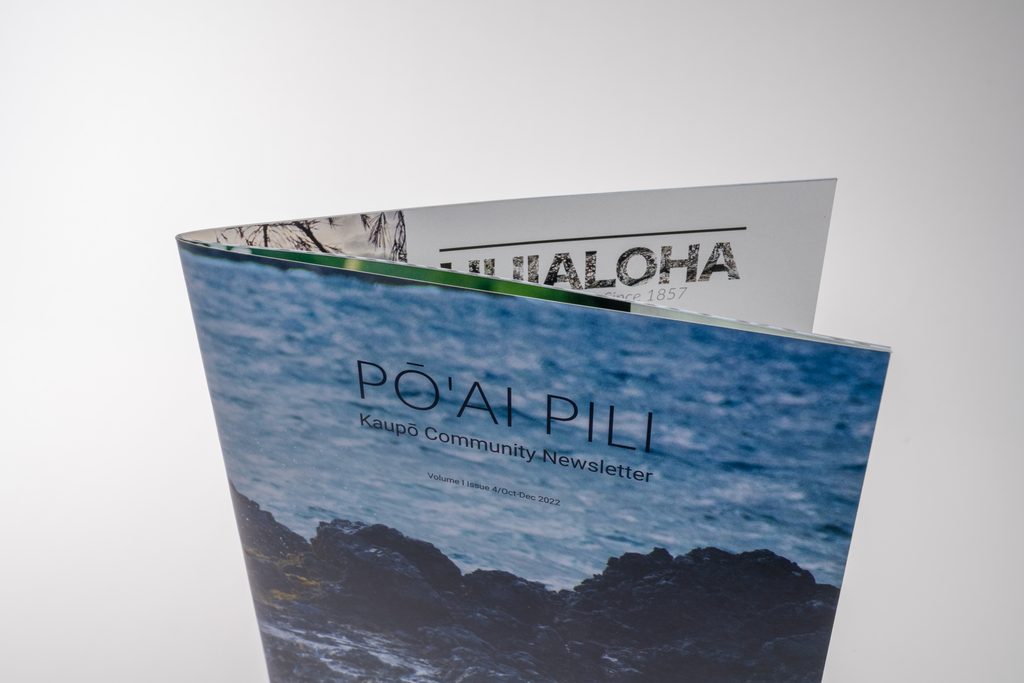
Why a Catalog Works When an Email Doesn’t
The same study surveyed customers on “product vividness” — essentially, how easily they could picture themselves owning or using a product — and catalog recipients rated it 5.6 out of 7, compared to 4.3 for email-only recipients. A catalog gives a product physical presence in a way a scrolling feed doesn’t: it can be flipped through, left on a table, and returned to more than once. That effect is strongest for what researchers call “hedonistic” purchases — the products people buy partly for how they’ll feel owning them, like jewelry, home goods, apparel, or travel — rather than routine, purely functional purchases.
Isn’t It Time to Reduce Catalog Printing?
It’s a fair question, and a lot of businesses are genuinely asking it — both for cost reasons and because nobody wants a stack of catalogs going straight into a recycling bin unread. But the lesson from the research above isn’t “print less” so much as “print smarter.” The catalogs that drove those results weren’t blanket mailings to everyone in a database — they were a deliberate, recurring piece sent alongside a broader marketing plan. The businesses actually cutting back successfully aren’t the ones abandoning catalogs; they’re the ones moving away from oversized, one-size-fits-all print runs toward smaller, better-targeted editions that only go to people likely to act on them.
Green Catalog Printing: Doing It Without the Waste
This is where sustainable printing and smart printing overlap almost completely. A few things make catalog printing genuinely greener rather than just labeled that way:
- Recycled and FSC-certified stock, so the paper itself carries a lower environmental footprint before a single catalog is mailed.
- Soy-based inks, which reduce the environmental impact of the printing process itself compared to petroleum-based inks.
- No print minimums, which matters more than it sounds — a lot of catalog waste comes from businesses over-ordering because a printer required a large minimum run, not because they actually needed that many copies.
- Right-sized, seasonal print runs instead of one massive annual catalog — printing smaller batches more often means less unsold or outdated inventory sitting in a closet.
- Carbon-neutral shipping, which addresses the footprint of getting the catalogs from press to mailbox, not just the paper and ink.
Put together, “green catalog printing” isn’t really a different product — it’s the same catalog, produced with better material choices and a print run sized to actual need instead of a printer’s minimum order.

What Makes a Catalog Actually Work
The format should match the job. A product line sheet or seasonal collection for a manufacturer looks and functions differently than a lookbook for an artist’s portfolio or a price list for a distributor — but all three benefit from the same underlying idea: giving a browsable, physical object to something that would otherwise live only in an inbox or on a product page. Magazines, event programs, manuals, and zines all borrow the same basic catalog format for the same reason — physical browsing does something a webpage doesn’t.
Getting the Format Right
Binding and size matter more than they might seem. Saddle-stitched (stapled) catalogs work well for shorter page counts and lower-cost runs; perfect-bound catalogs give a flat spine and a more premium feel for thicker page counts; wire-O and spiral coil binding let a catalog lie fully flat or fold back on itself, which is useful for anything meant to be referenced repeatedly rather than read straight through. Standard sizes run from 5.5″ x 8.5″ up to 8.5″ x 11″, with custom sizes available, and page counts anywhere from 8 pages up to 60 or more depending on the binding method chosen.

A Note on Getting It Printed
Greenerprinter prints catalogs with no minimums — so a small seasonal edition costs the same relative sense as a larger run — on 70# to 100# uncoated or silk-coated stock with recycled content ranging from 10% to 100%, all FSC certified. Production runs 2–7 business days after proof approval, printed in Richmond, CA with soy-based inks and carbon-neutral shipping on every order. For more on planning one out, see our guides on catalog printing costs and product catalog design.
Ready to bring your project to life? Greenerprinter offers a full range of sustainable printing options. Explore some of our most popular products:
Calendar Printing
Custom Calendars | Wall Calendars | Saddle-Stitched Calendars
Book & Booklet Printing
Custom Books | Custom Booklets | Saddle-Stitched Booklets | Zines | Catalogs
Brochure Printing
Custom Brochures | Tri-Fold | Bi-Fold | Gate Fold | Z-Fold