

If you’ve ever ordered custom labels and paused at the checkout screen wondering whether “roll” or “sheet” is the right choice, you’re not alone. The two terms get used interchangeably online, which only adds to the confusion — so let’s clear it up with plain definitions, real examples, and a straightforward way to decide which one fits your product.
What Are Sheet Labels?
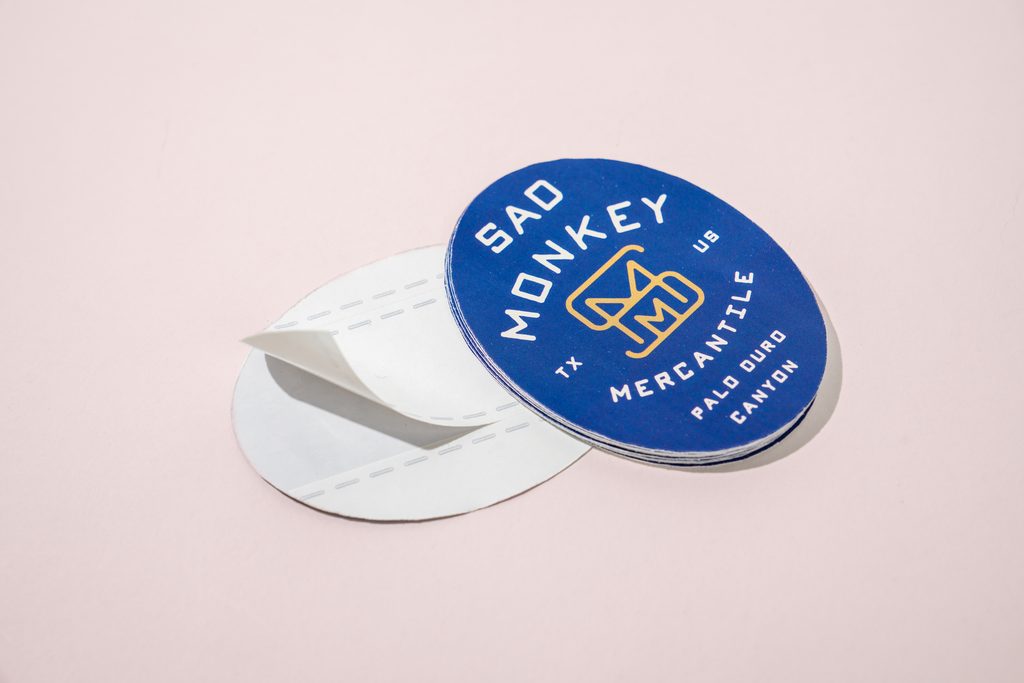
Sheet labels — sometimes called “labels by the sheet” — are individual, pre-cut labels arranged in rows and columns on a flat sheet, usually letter-size (8.5″ x 11″). Think of the sheet as a piece of paper with a grid of stickers on it that peel off one at a time. That’s the meaning of sheet labels in a nutshell: convenience-sized, ready to hand-apply, no special equipment required.
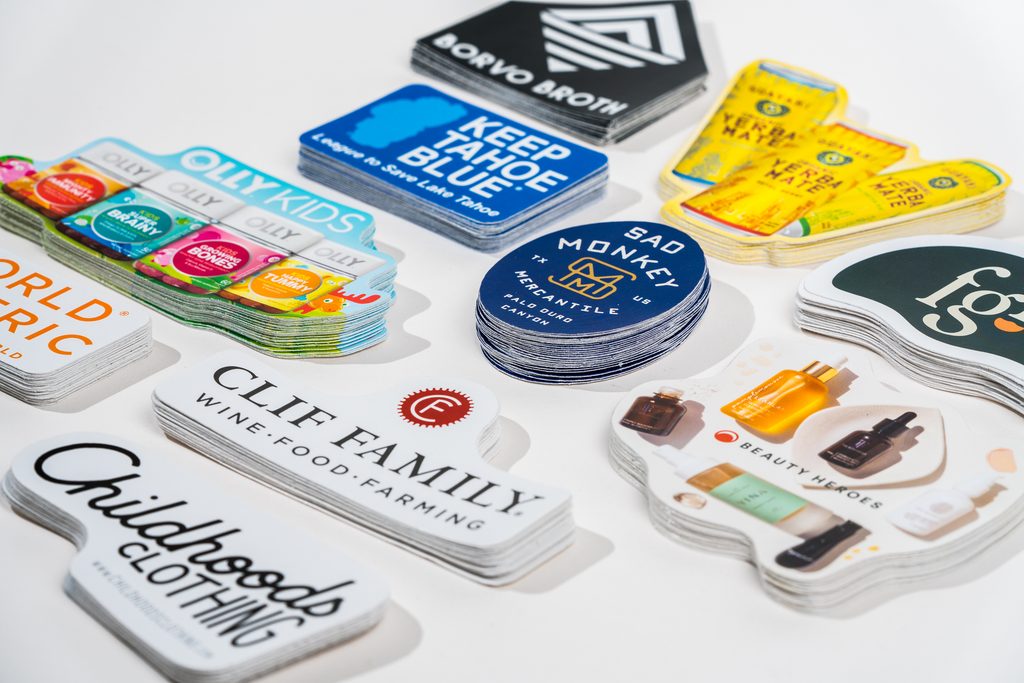
Examples of sheet labels include address and shipping labels for home offices, product labels for small-batch candles or jars, jar and bottle labels for food and beverage makers, name badge labels, and organization labels for retail shelving. If you’re printing a modest run and want to peel-and-stick by hand, sheet labels are usually the format built for that.
What Are Roll Labels?
Roll labels are continuous labels wound around a cardboard core, fed through a dedicated label printer or applicator rather than a standard desktop printer. This is the definition of roll labels most manufacturers use: a strip of individually die-cut labels connected end to end on a liner, ready to dispense one after another without reloading a sheet each time.
Types of roll labels generally fall into three categories:
- Direct thermal rolls — printed using heat, no ink or ribbon needed, common for shipping and receipt-style labels (though they can fade over time with heat or sunlight).
- Thermal transfer rolls — use a ribbon to transfer ink onto the label, producing a more durable, longer-lasting print for things like product barcodes or outdoor use.
- Inkjet or laser roll labels — run through roll-fed inkjet or laser printers, popular for full-color product labels in small business production runs.
Why Do Businesses Use Roll Printing?
Businesses lean on roll labels mainly for one reason: automation. Rolls are built to feed through labeling machines and applicators, so a business bottling hundreds of units a day can apply labels in seconds instead of peeling and pressing each one by hand. That translates into lower per-label cost at high volume, less manual labor, and consistent placement across every unit. If you’re producing at scale — a growing beverage brand, a fulfillment warehouse, a co-packer — roll labels are usually what keeps the line moving.
Roll Labels vs. Sheet Labels: The Side-by-Side
| Sheet Labels | Roll Labels | |
|---|---|---|
| Best for | Small batches, hand-applied labeling | Large batches, machine-applied labeling |
| Equipment needed | Standard inkjet/laser printer | Dedicated label printer or applicator |
| Application | By hand, one at a time | By hand or by machine, fed continuously |
| Cost at low volume | Lower | Higher (setup costs) |
| Cost at high volume | Higher per unit | Lower per unit |
| Common materials | Paper, matte, glossy, kraft | Paper, vinyl, poly, kraft, weatherproof films |
How Many Labels Are on a Sheet?
This depends entirely on the label’s size and the sheet layout, since it’s a matter of geometry rather than a fixed standard. A sheet of small return-address labels might hold 30 or more; a sheet of larger 4″ x 6″ shipping-style labels might hold only 4 to 6. When you’re comparing sheet label pricing, it’s worth checking labels-per-sheet rather than assuming every sheet holds the same count — it changes the real cost per label more than most people expect.
Hand-Applying Labels: Rolls, Sheets, or Individually Cut?
A common question for anyone labeling products by hand — jars, boxes, bottles — is whether a roll or an individually cut label is actually easier to work with. Individually cut labels (whether from a sheet or a small “fanfold” stack, more on that below) tend to be simpler to grab, align, and press by hand one at a time, since each label is already separated. A roll works fine for hand-application too, especially in smaller core sizes, but you’re pulling and tearing each label off the liner as you go, which can slow things down if you’re labeling a large batch without an applicator. The short version: for occasional, by-hand labeling, cut or sheet formats are usually the path of least friction; once you’re applying labels by the hundreds regularly, an applicator-fed roll starts to save real time.
Fanfold vs. Roll Labels
Fanfold labels are the same continuous, die-cut label strip you’d find on a roll — except instead of being wound around a core, the strip is folded back and forth into a flat, accordion-style stack. Businesses without rewind equipment sometimes prefer fanfold because there’s no spool to manage and no “memory curl” (the slight curve labels can develop after sitting on a roll). The tradeoff is that fanfold stacks take up more shelf space and can be a little more prone to misfeeds if the folds aren’t handled carefully.
So, Which One Should You Choose?
If you’re labeling a few dozen or a few hundred products by hand — candles, soaps, small-batch food items, gifts — sheet labels are the simpler, lower-commitment choice, and they print on equipment you likely already own. If you’re producing at real volume, running products through a fulfillment line, or need consistent, fast application across thousands of units, roll labels (with or without an applicator) are built for that job. Many growing businesses actually use both: sheets for short runs and one-off products, rolls once a product line scales up.
Whichever format fits your run, it’s worth choosing a printer that can produce both without cutting corners on materials. Greenerprinter prints custom die-cut, kraft, circle, and rectangle stickers and labels using FSC-certified stock, soy-based inks, and renewable energy — so the format you choose doesn’t have to be a tradeoff against sustainability.
Ready to bring your project to life? Greenerprinter offers a full range of sustainable printing options. Explore some of our most popular products:
Calendar Printing
Custom Calendars | Wall Calendars | Saddle-Stitched Calendars
Book & Booklet Printing
Custom Books | Custom Booklets | Saddle-Stitched Booklets | Zines | Catalogs
Brochure Printing
Custom Brochures | Tri-Fold | Bi-Fold | Gate Fold | Z-Fold