
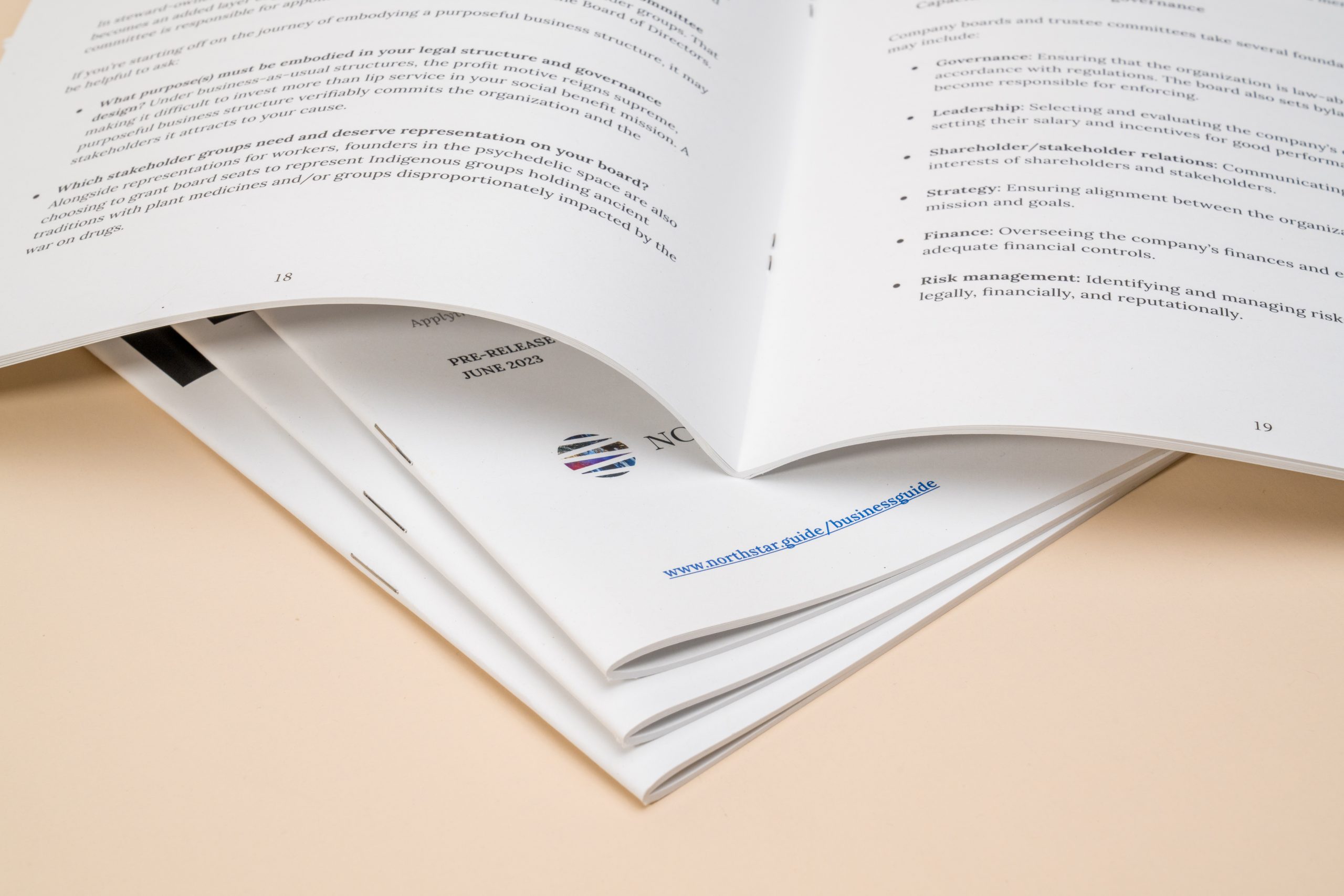
A saddle stitch booklet is a folded booklet bound with staples through the center fold. It’s one of the most common formats for programs, small catalogs, lookbooks, menus, and short guides because it’s lightweight, clean-looking, and easy to flip through.
In print production, this method is called saddle stitch binding: printed sheets are folded, nested together, stapled along the fold, then trimmed on the open edges for a crisp finish.
When people search for saddle stitch booklet printing, they’re typically looking for the full package: printing plus folding, stitching, and trimming.
Why Is It Called Saddle Stitch? Saddle Stitch Binding
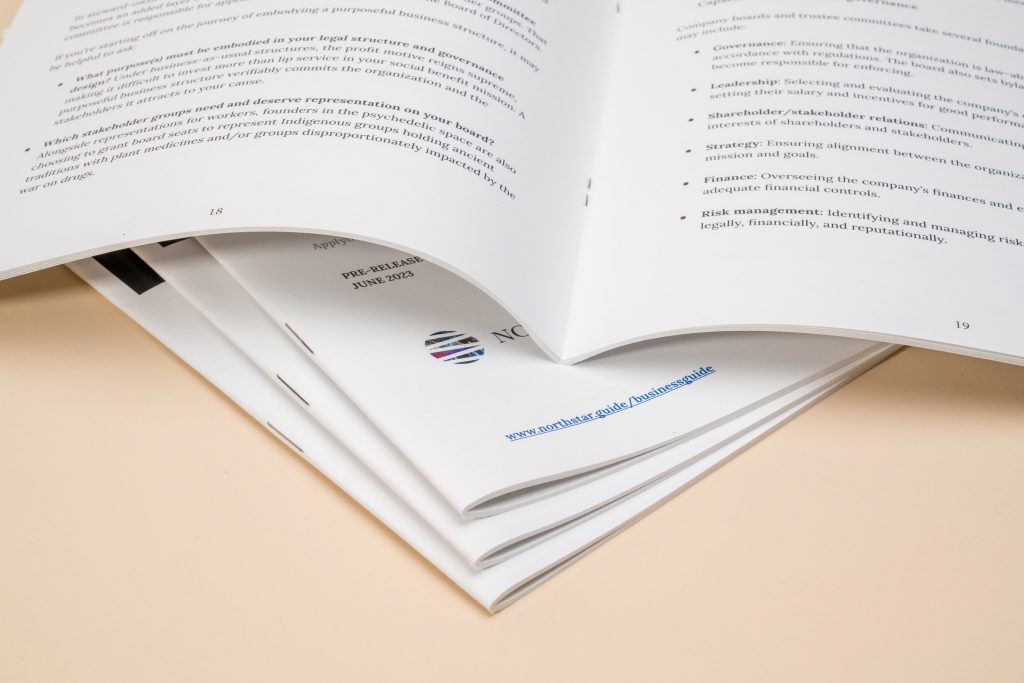
The “saddle” part comes from how the booklet travels through the binding equipment. During stitching, the folded sheets are placed over a saddle-shaped support (think of a ridge that the fold sits on).
The pages ride that support as the machine drives staples through the fold line. That’s also why you’ll hear “stitch” used instead of “staple” in printing: it’s the bindery term for fastening pages at the spine.
What Does A Saddle Stitch Booklet Look Like?
A saddle-stitched booklet typically has a visible fold at the spine and two staples centered along that fold. Some pieces use one staple (small formats) or three+ staples (larger booklets). After binding, the booklet is trimmed on the outer edges so the pages align evenly and the finished piece feels sharp in-hand.
Saddle Stitch Booklet Page Count: The Rule That Drives Your Layout
Even custom saddle-stitched booklets must have a total page count in multiples of four: 4, 8, 12, 16, 20, and so on. That’s because each folded sheet creates four pages in the finished booklet.
If your content lands at 10 pages, you’ll need to move up to 12 pages (and use the extra space intentionally). The cover also counts as pages, since a cover sheet creates four cover panels (outside front, inside front, inside back, outside back).
A quick parent-sheet example (so the math clicks)
Here’s the most common example customers recognize:
A standard 8.5″ × 11″ booklet is often printed on 11″ × 17″ parent sheets. Each 11″ × 17″ sheet prints with two pages on one side and two pages on the other, then folds in half to become a booklet section.
Once folded, that single parent sheet becomes 4 pages in the final booklet.
Now the page count math is simple:
1 folded sheet = 4 pages
5 folded sheets = 20 pages
8 folded sheets = 32 pages
If you add a separate cover stock, that’s still a folded sheet (another set of four pages), just on heavier paper.
How Many Pages Can You Saddle Stitch?
There’s no universal maximum because paper finishing, paper weight, trim size, and even equipment vary.
In practice, saddle stitch binding works best for short to mid-length booklets. As page count climbs, the folded spine gets bulkier, and the booklet can start to “spring” open or look uneven at the fore edge.
If you’re planning a thicker piece, you have three smart options:
- choose a lighter interior stock
- reduce page count
- switch to perfect binding or another method
If you want a slim booklet that feels magazine-like, saddle stitch is usually the right starting point. If you need a printable spine and a thicker “book” feel, perfect binding often wins.
Perfect Bound Vs Saddle Stitch
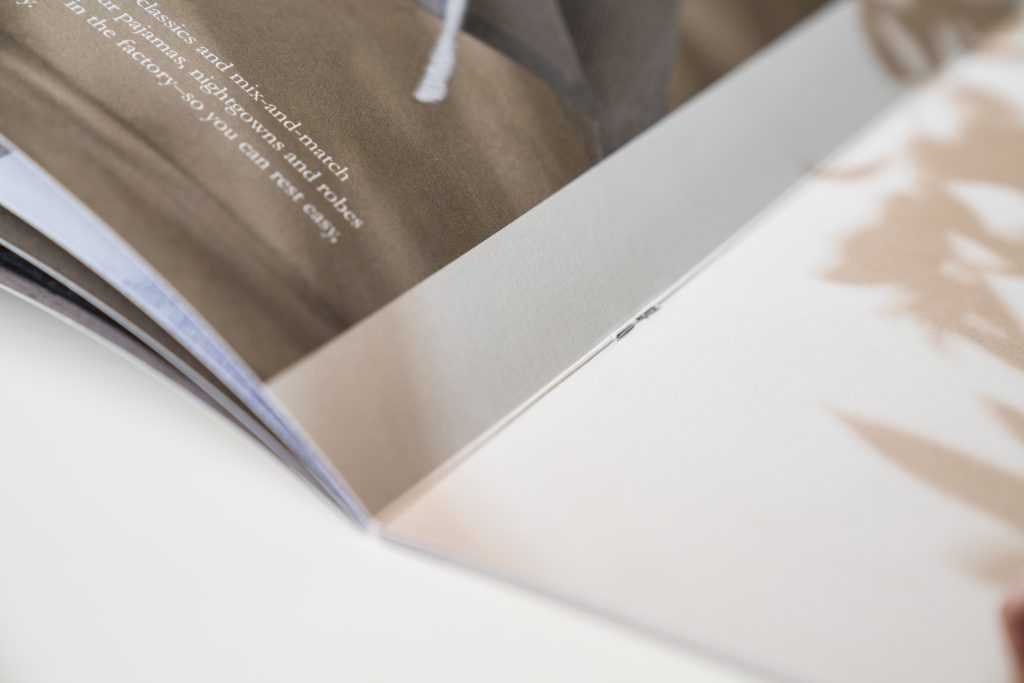
Saddle stitch booklet printing is a strong fit when you want a piece that opens easily, stays lightweight, and is cost-conscious for shorter page counts. It’s the go-to choice for custom calendar printing.
Perfect binding is commonly chosen when page counts rise and you want a flat spine for titles, shelving, or a more substantial catalog/manual feel. The tradeoff is that perfect bound books typically don’t open as flat as saddle-stitched pieces, and production specs are different.
Full-Bleed Vs No-Bleed Saddle-Stitched Booklets
Understanding bleed is a frequent point of confusion, and it affects both file setup and finishing.
A no-bleed booklet keeps all artwork inside the page edge (often with a white border). The pages can still be trimmed for consistency, but you’re not relying on color running to the edge. It’s a forgiving option for simple layouts and quick-turn pieces.
A full-bleed booklet has images or color that print all the way to the edge of the page. To get that clean edge, the printer must trim through printed color. That requires bleed in your file and tighter production control.
Here’s what “full-bleed ready” usually means in practical terms:
- Add 0.125″ bleed on all sides for any element that touches the edge.
- Keep logos, text, and page numbers inside a comfortable safe margin (often 0.25″+ from trim, depending on the design).
- Avoid hairline borders near the edge. They can look uneven after trimming, even with good finishing.
If you’re not sure which route fits your project, think about how the booklet will be used. Full-bleed often feels more premium and photo-forward. No-bleed can look clean and intentional, especially for minimal brands, and it can simplify production.
Creep: The Detail That Impacts Thicker Saddle-Stitched Books
As more folded sheets nest inside each other, inner pages push outward slightly. After trimming, the inside pages can end up with a tighter outside margin than the outer pages. That effect is called creep.
If your booklet is on the thicker end for saddle stitch, plan extra breathing room in your margins and keep critical content away from the trim edge. A good print partner can also adjust imposition to manage creep for you.
Finishing Options That Make Saddle Stitch Booklets Feel Premium
Finishing is where a saddle stitch booklet can move from “nice handout” to “keepsake marketing piece.” The best choices depend on how the booklet will be handled, how long it needs to last, and the visual style of the brand.
Here are finishing options that commonly add value:
- Heavier cover stock (plus-cover): Upgrades durability and gives the booklet a more intentional feel.
- Matte or gloss aqueous coating: Adds scuff resistance and improves handling without the plastic feel some laminations create.
- Soft-touch laminate (cover): A high-end tactile option for lookbooks and premium brochures.
- Spot UV (cover accents): Adds contrast for logos or key imagery when used sparingly.
For eco-conscious projects, you can pair saddle stitch binding with recycled papers and responsible sourcing, then choose coatings and finishes that support the sustainability goals of the piece.
How To Prep Files For Saddle Stitch Booklet Printing
If you’re building in InDesign, a reliable approach is to set the document to final trim size, add bleed if needed, keep margins comfortable, then export a press-ready PDF with bleed included. If your booklet includes full-bleed art, confirm bleed and trim requirements with your printer before final export.
Print Your Saddle Stitched Booklet GreenerPrinter
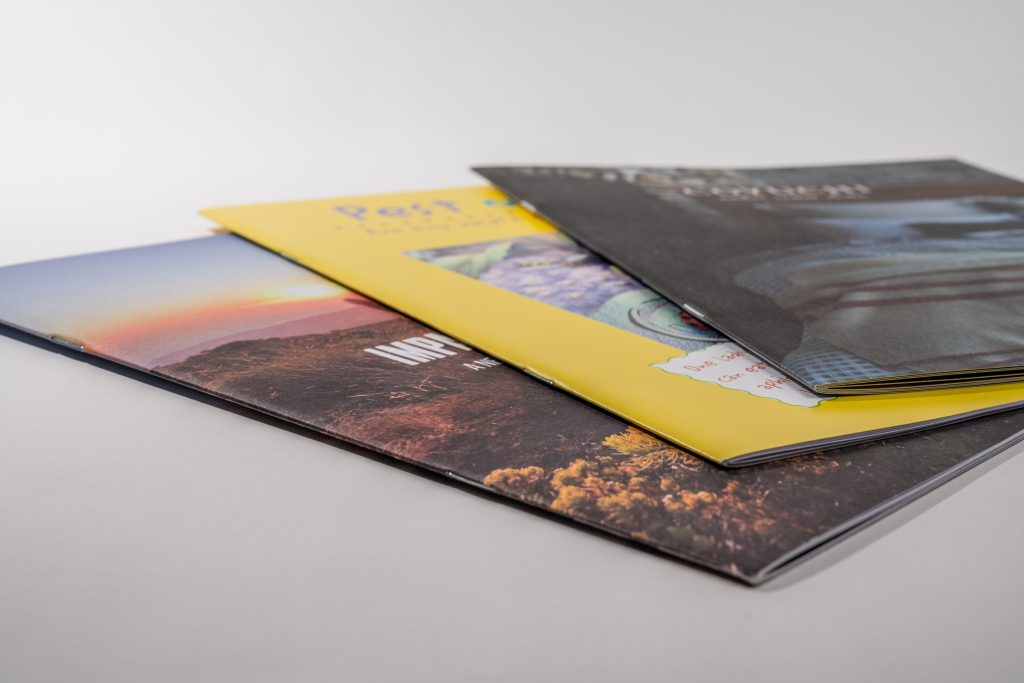
A saddle stitch booklet can look simple, but the best results come from smart choices on page count, paper, bleed, creep, and finishing. Greener Printer helps you spec the job, prep files with confidence, and produce premium, eco-conscious saddle stitch binding that represents your brand well.
If you share your project details, we’ll recommend the right setup for your saddle stitch booklet printing and keep production smooth from proof to delivery.
Ready to bring your project to life? Greenerprinter offers a full range of sustainable printing options. Explore some of our most popular products: